Thoughts on the Copyright Alert System
UPDATE: Added mention of the $35 appeal fee in the “Appeals” section below.
Taxonomy upgrade extras

UPDATE: Added mention of the $35 appeal fee in the “Appeals” section below.
The Senate is gearing up for another go-round on rogue websites legislation, and this time, they've jettisoned the "COICA" label in favor of calling it the "PROTECT IP Act." Like a summer blockbuster sequel, it tightens up some things, adds a few new villains, but in the end reprises the same general plot.
While I am confident that a breach of contract has been committed, it’s not clear yet that it’s even a crime. And “piracy?” Amazing how we manipulate language these days: Piracy Puts Film Online a Month Before Theater Opening (pdf)
Leading to the movie industry’s “Napster moment?” That’s the contention of this article: Digital Pirates Winning Battle With Studios (pdf)
Learn about our legal services for: App Developers, Artists & Graphic Designers, Bloggers & Journalists, Clothing Designers, Entrepreneurs, E-commerce Business People & Startups, Filmmakers & YouTube creators, Public Broadcasting producers,Game Developers, Internet users & Smartphone users, Makers, Musicians, Non-Profits, Photographers, Scholars, Researchers, and Writers and Publishers.
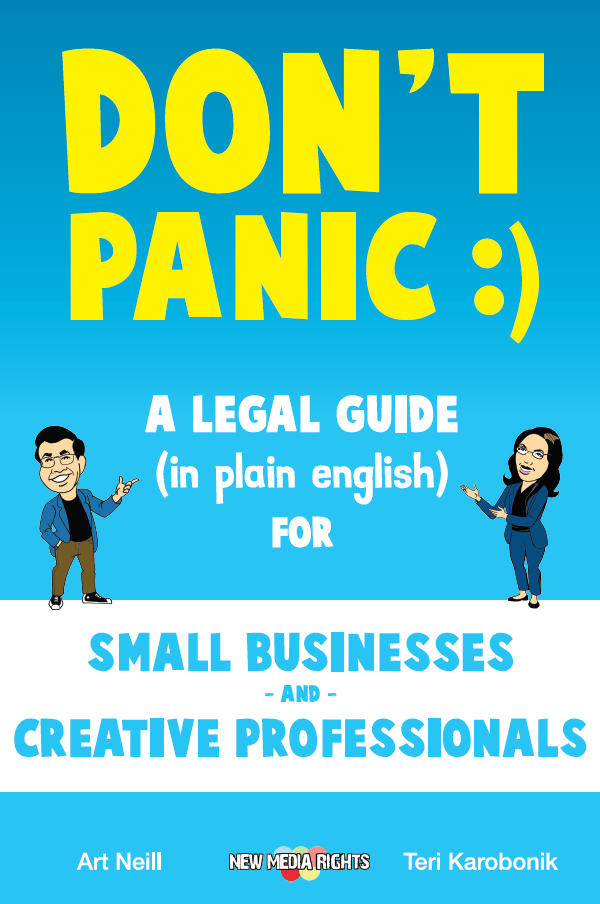 In our new book, we focus on issues you may encounter from the inception of your business to the moment (that hopefully doesn’t happen) you get a nasty lawyer letter for the first time.
You’ll learn how to form your business, protect your intellectual property, and avoid problems when launching your project. Taking a few simple steps upfront to protect your business or project can save time and money down the road. Don't Panic has also been used in undergraduate & graduate classes nationwide to teach business and legal concepts to non-lawyers. Professors can request a FREE evaluation copy
CHOOSE YOUR FORMAT
