Representing Internet users at the FCC - May 2013 newsletter

New Media Rights


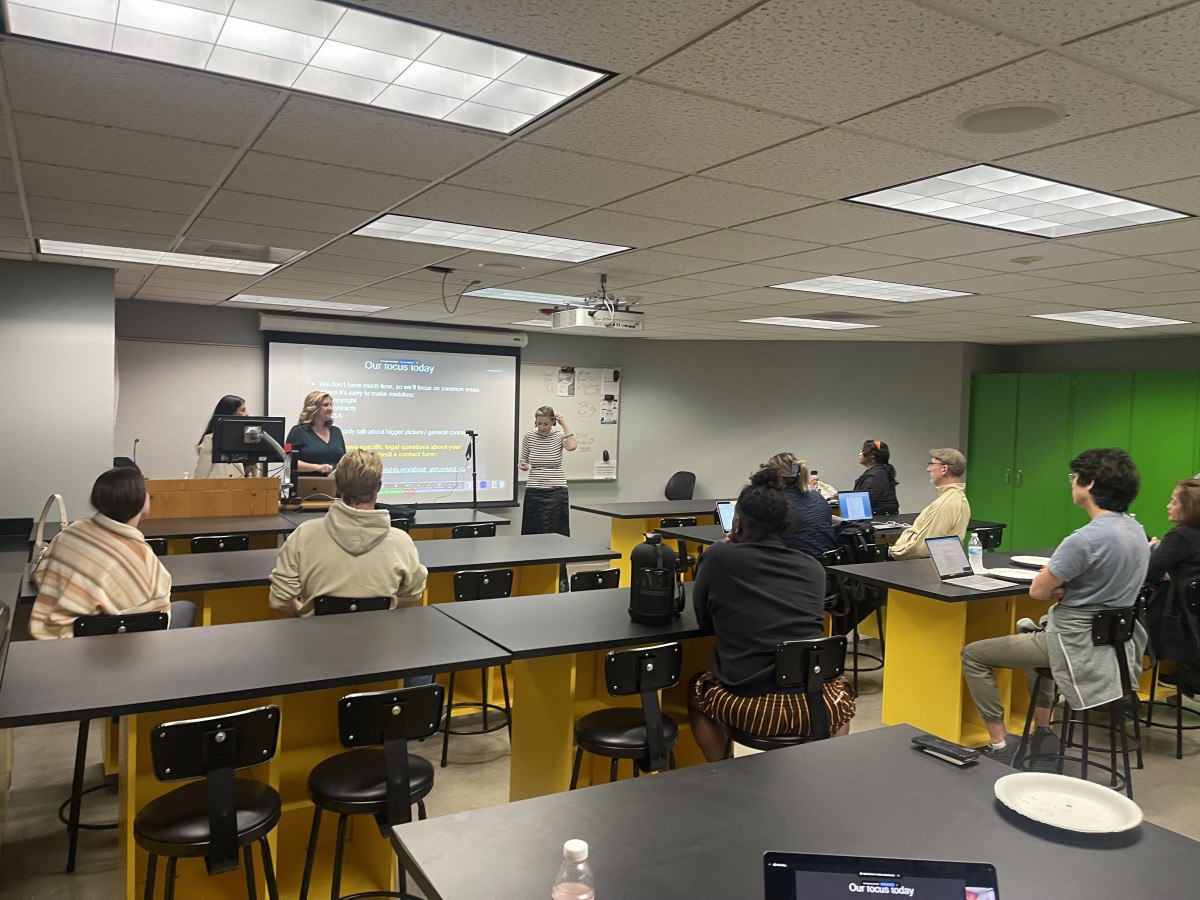
We've gotten off to a great start this year, providing services to over 123 individuals since January 1, giving over 6 legal basics workshops, and representing creators and consumers at the FCC's Consumer Advisory Committee.   We've shared a few highlights below as we head into an exciting summer for NMR!  
 
Representing internet users and consumers at FCC


New Media Rights represented consumers and independent creators at the @FCC Consumer Advisory Committee Friday, April 26. The full recording of the meeting is here. The meeting covered many upcoming issues facing the incoming FCC Chairman, including an upcoming spectrum auction to free up spectrum for wireless devices, disability and rural access, as well as many other consumer issues.

Specifically, Art Neill from New Media Rights raised the issue of the Federal Communications Commission plan a few years back to launch a committee regarding the Commission's Open Internet Regulations. This committee has still not been formed, and some kind of 3rd party review is critical for consumers and independent creators to make sure that these rules are actually being enforced. You can count on us to continue to work to make sure the Open Internet rules are being properly enforced.


A big thank you to Shaun Spalding


In April long time team member and Assistant Director Shaun Spalding headed off to work on a variety of creative projects, including producing a documentary film that he's wanted to pursue for a number of years.  Shaun started as a legal intern at New Media Rights in 2010, and then became staff attorney in 2011, followed by Assistant Director in 2012.  Shaun has many talents, and was willing to lend them all to improve New Media Rights. Specifically, Shaun has been a force for creating over 100 successful educational videos, and providing dedicated advocacy to hundreds of internet users and creators over the years.  He's also simply a great colleague.  Luckily we aren't saying goodbye, as Shaun has joined our Advisory Board and will hopefully be involved with New Media Rights for years to come.  A big thank you to Shaun and best wishes in his creative work!

Welcoming new legal interns!

We're thrilled to welcome
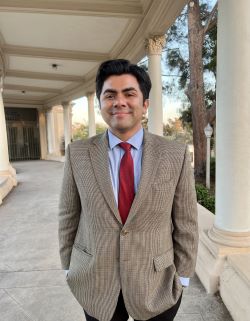
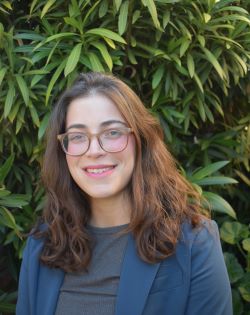
Casey Lowe, Marlena Balderas, and Marko Radisavljevic as new legal interns with New Media Rights this summer.  We're also excited to welcome back legal interns Jordan Kohler, Lauren Brady, and Matt Prellberg. 

We are grateful to all our legal interns for their contributions to New Media Rights.  We couldn't help so many internet users and creators without their hard work.

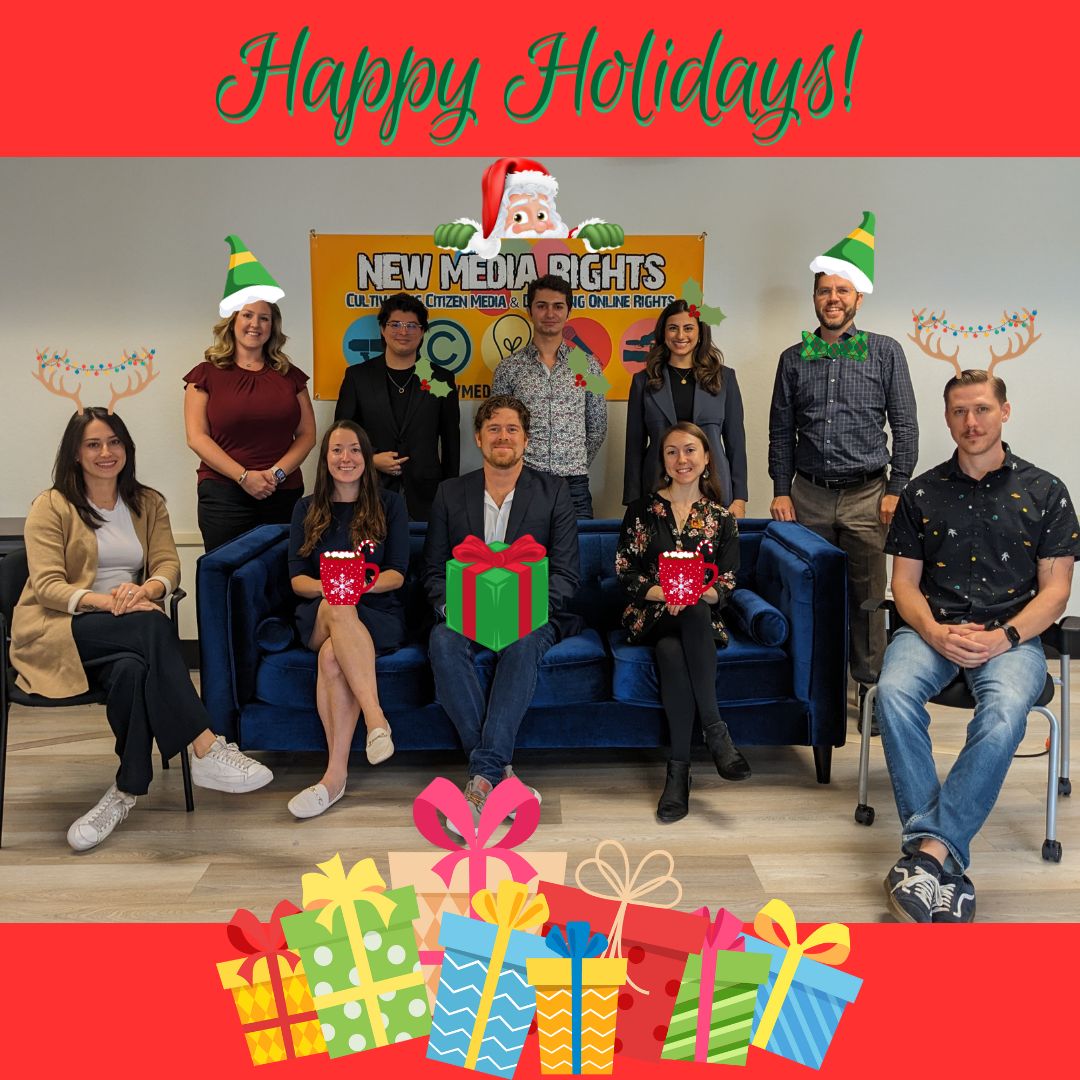
You can read bios and see photos of the whole team by visiting our Meet the NMR Staff page.


Revamping the website!


Our website recently got a pretty serious aesthetic update. We hope you find the new site format a bit easier to navigate. We'd love for you to take a look and let us know what you think. If you have comments or suggestions please send them to support @ newmediarights.org.  Remember, we base our guides and videos on your input, so please let us know if you have a particular guide to suggest.

ISSUE WE'RE MONITORING - Youtube Isn't Honoring DMCA takedowns?

Unfortunately, New Media Rights has seen evidence in recent months that suggests that some large media companies have been able to override legitimate appeals and disputes by users regarding content takedowns on Youtube. This guest blog from Patrick McKay of the Fair Use and Youtube watchdog FairUseTube.org, explains the problem in more depth.

We're monitoring the issue closely and trying to gather additional information to help address this issue, so feel free to contact us with additional information you may have regarding DMCA counternotices that fail restore disputed content on Youtube.


Upcoming Events

Alliance for Community Media Conference May 30 in San Francisco


New Media Rights Executive Director Art Neill will be speaking on a panel at the Alliance for Community Media Annual Conference on May 30, 2013 in San Francisco, CA from 2:00pm at the Westin St. Francis in San Francisco..

The topic of the panel will be "Free Speech vs. Copyright: An Intersection or a Collision."

The panel will be an opportunity to give positive support to artists, showing them the ways the law can actually empower their creativity, how to avoid legal disputes in the first place, and how to move forward if you do face legal threats.

The conference takes place from May 29-31 at the Westin St. Francis in downtown San Francisco.


Space 4 Art Emerging Artists series June 6 in San Diego

New Media Rights will be giving a talk at Space 4 Art in the East Village of Downtown San Diego.  The talk will be called "
Copyright, Fair Use, Creative Commons and Other Ways the Law  Empowers Media Creators," and focus on the ways the law can empower artists.  This event is tentatively set for June 6 at 7pm at Space 4 Art, but check the Space 4 Art website and NMR's website for more details as they become available.

Useful guides - The NMR website has all kinds of guides and videos to help artists and creators, here's a few highlighted guides

Guides

How to find free music, images, and video you can use or remix in your own creative works 

Videos

What can't be copyrighted?

If I pay someone to create something for me, do I own the Copyright to the work?


New Staff Attorney and Advisory Board members

In June we'll be announcing a new staff attorney and our advisory board members for 2013, so keep an eye out for that announcement!


How can you support independent creators and artists?

New Media Rights is an independently funded nonprofit program and relies on the support of individuals like you to provide free and low cost legal services to internet users and creators.

We accomplish a great deal on a modest budget, so any donation makes a huge impact for us.

You can make a donation to support legal services and advocacy for internet users and creators by clicking here.

Please also make sure to connect with New Media Rights on
 Twitter, Facebook, and Youtube.
 
Thanks again for being part of the New Media Rights community. Keep an eye out as our future battles and work on behalf of internet users and independent creators continues.

All the best,

The New Media Rights team


Topics: 

Content Types: 

Tags: 

NMR to speak on free speech & copyright law at the Alliance for Community Media Conference May 30 in San Francisco

New Media Rights Executive Director Art Neill will be speaking on a panel at the Alliance for Community Media Annual Conference on May 30, 2013 in San Francisco, CA.

The topic of the panel will be "Free Speech vs. Copyright: An Intersection or a Collision."

The panel will be an opportunity to give positive support to artists, showing them the ways the law can actually empower their creativity, how to avoid legal disputes in the first place, and how to move forward if you do face legal threats.

The conference takes place from May 29-31 at the Westin St. Francis in downtown San Francisco.

Here's a description of the panel:

Free Speech vs. Copyright: An Intersection or a Collision?

How does community media’s promotion of the First Amendment sit with the standards we adopt for copyright? Can we respect Intellectual Property, Intellectual Freedom and Internet Protocols all at the same time? We’ll discuss the parameters and limits for what we can show on TV and online, where we can source content from, and how concepts such as Fair Use, Free Speech, and Creative Commons relate to community media. We’ll offer suggestions to both producers and programmers for realizing the full possibilities of freedom of expression and consider what restrictions one should adhere to.

Content Types: 

Tags: 

Casey Lowe

Job Title: 

Joined NMR in: 

February 2013

Originally from the Detroit area, Casey graduated from Michigan State University where he double-majored in International Relations & Film Studies. Over the last few years, he's lived in Portland, Seattle, New York City and London while working for various companies in the media industry. Currently wrapping up his first year of law school at California Western, he's now pursuing his interests in Public Interest and Intellectual Property law. Casey is also an avid record collector and film enthusiast.

Marlena Balderas

Job Title: 

Legal Intern

Joined NMR in: 

May 2013

Before attending law school, Marlena was a public relations account manager for several firms in Phoenix, Arizona. Realizing her true passion for helping people, Marlena entered law school with the hopes of helping people turn their start-up dreams into thriving businesses. Marlena has a special interest in media communications, as well as business law, and is excited to help clients solve any legal issues they encounter. During her free time she enjoys all outdoor sports and activities.

Marko Radisavljevic

Job Title: 

Legal Intern

Joined NMR in: 

May 2013

Marko is entering his 2L year at California Western School of Law in San Diego where he plans to focus on IP law and Business Organizations.  He received his undergraduate degree in Biology with a minor in chemistry at the University of San Diego.  After determining that Medicine was not his true passion he entered the work force and thrived in the small business world helping two San Diego internet marketing companies grow rapidly.  He decided to return to school and get his law degree so ultimately he could merge his passions and work for small businesses with unique ideas and help them grow.  In his free time Marko enjoys playing soccer, hockey, and tennis every week and tries to find time to play his guitar as often as possible.

NMR to give legal basics workshop at May 3 Film Consortium San Diego event

On Friday, May 3, 2013, at the Independent Film Consortium's Pitchfest and Mixer, Art Neill, Executive Director and Attorney with New Media Rights, will offer a workshop, entitled

"Law 101 for video creators: How can I use music and video from others in my video?"

The workshop will discuss basic aspects of reusing music, video, and other copyrighted content in your videos. Topics including licensing, public domain, and fair use will be discussed.  This workshop is made available with the support of the San Diego Economic Development Department. New Media Rights is an independently funded program of California Western School of Law, and can be found at http://newmediarights.org.
 

Additional Event Info

https://www.facebook.com/events/154942494656908/

This event is open to all that participate in the filmmaking process including writers, actors, production and post-production professionals, as well as those involved in distribution, finance, and academia. Even if you are just trying to figure out how to break into the business, this event is for you as it will be a great opportunity to network with those that are making it all happen.

We encourage each filmmaker/actor, etc., to bring headshots, contact cards, screeners, reels, links to work, writing samples, or any other information that you would like to distribute to the various participants. This is important as local filmmakers will be pitching their projects and looking for talent and crew to assist.

This event will be held at the beautiful Four Points Sheraton Hotel, (8110 Aero Drive, San Diego, CA 92123) conveniently located right off the freeway in Kearny Mesa where there is always plenty of free parking. Cocktail service will be available.

Content Types: 

Is Youtube refusing to honor DMCA counter-notices?

Unfortunately, New Media Rights has seen evidence in recent months that suggests that some large media companies have been able to override legitimate appeals and disputes by users regarding content takedowns.  Our guest blog below from Patrick McKay of the Fair Use and Youtube watchdog FairUseTube.org, explains the problem in more depth.

We're monitoring the issue closely and trying to gather additional information to help address this issue, so feel free to contact us with additional information you may have regarding DMCA counternotices that fail restore disputed content on Youtube. Regardless, this is a reminder of one of the often ignored secrets about the DMCA safe harbors that protect websites like Youtube - that service providers may choose to honor takedown notices from copyright holders and not to honor counternotices from users.  The practice may be legal, but the consequences on the range of expression on services like Youtube is significant.  
 
Under the default law, Youtube might still be liable to the user, but even then the remedies a user could obtain from Youtube may be small, and Youtube attempts to try to further cover themselves in their terms of use as follows.
 
"If a counter-notice is received by the Copyright Agent, YouTube may send a copy of the counter-notice to the original complaining party informing that person that it may replace the removed Content or cease disabling it in 10 business days. Unless the copyright owner files an action seeking a court order against the Content provider, member or user, the removed Content maybe replaced, or access to it restored, in 10 to 14 business days or more after receipt of the counter-notice, at YouTube's sole discretion."
 
That's why its important for us as users to keep a close eye on what Youtube is doing and place consumer pressure on Youtube to actually "not be evil" in terms of providing fair process for videos to appeal takedowns. It's also a reminder that the more Youtube's revenue model includes large media company content partners, the more influence those companies can have over the content we can access online.
 

Youtube refusing to honor DMCA Counter-notices


by Patrick McKay

Last October, YouTube announced some much needed reforms to its Content ID copyright dispute process. Bowing to growing public pressure, YouTube ended the practice of allowing copyright claimants to unilaterally deny disputes, leaving users with no further recourse to have non-infringing videos restored.

YouTube established a new “appeals” process, which once again gave users whose videos are blocked by Content ID recourse to the DMCA counter-notice process if the copyright owner insists on rejecting their dispute. At the end of the process, the user’s video would be restored unless the copyright claimant actually filed a lawsuit seeking an injunction to keep it offline. No longer.

YouTube refuses to honor counter-notices for “contractual reasons”

For months I have been trying to discover why many users have been receiving responses to DMCA counter-notices stating, “It appears that you do not have the necessary rights to post the content on YouTube. Therefore, we regretfully cannot honor this counter-notification.” I even got in touch with a YouTube product manager who promised to look into the situation for me, though he has not yet provided me with any answers. While I initially suspected some kind of technical glitch, it now appears that something far more nefarious is going on.


I have recently discovered evidence that YouTube has contracts with certain copyright holders (including Universal Music Group – UMG) to refuse to honor DMCA counter-notices sent in response to their copyright takedowns—essentially giving them the power to take down any video they wish, even if it does not infringe their copyright in any way.

It is interesting to note that a little over a year ago when UMG infamously took down the “Megaupload Song” video with a completely bogus copyright claim, UMG claimed it had unspecified “contractual rights” to do so even if it did not infringe its copyrights. At the time however, YouTube explicitly denied having a contract with UMG that gave them the right to take down videos on which they had no legitimate copyright claim, stating, “Our partners do not have the right to take down videos from YouTube unless they own the rights to them or they are live performances controlled through exclusive agreements with their artists…”

It appears things have changed. Consider the following:

Last week I was contacted by a YouTube user named John (YouTube username: WernerVonWallenrod), who mainly posts reviews of old vinyl records. He uploaded a roughly 7 minute videoreviewing an old Eric B. & Rakim record from the 1980s, 90% of which consists of him standing in his kitchen talking about the record. The video includes a couple clips of him playing short (<1 minute) segments of the record while filming the record player.

Because the video uses only short, low-quality segments of a few songs on the record for purposes of critical commentary and review, the video almost certainly qualifies as a textbook example of fair use. Nevertheless, UMG had the video taken down with a DMCA notice. Believing his video to be fair use, John sent a properly filed DMCA counter-notice in response. A few days later, he received this email from YouTube (emphasis added):

Hi there,

Thank you for your counter-notification. The complainant has reaffirmed the information in its DMCA notification. YouTube has a contractual obligation to this specific copyright owner that prevents us from reinstating videos in such circumstances. Therefore, we regretfully cannot honor this counter-notification.

You may learn more about this here:

http://support.google.com/youtube/bin/answer.py?hl=en&answer=3045545

We unfortunately are unable to assist further in this matter. You may wish to contact the complainant directly at youtube@umusic.com.

 Regards,

 Linda

The YouTube Team

This message is extremely disturbing for multiple reasons. It appears that YouTube is saying it essentially has a contract with UMG to ignore DMCA counter-notices sent against its copyright claims, so that even if the copyright takedown has no legal basis, YouTube must nevertheless refuse to restore the video if UMG “reaffirms” the information in its DMCA notice. The help page referenced in the email providers further details (emphasis added): 

Videos removed or blocked due to YouTube's contractual obligations

YouTube enters into agreements with certain music copyright owners to allow use of their sound recordings and musical compositions.

In exchange for this, some of these music copyright owners require us to handle videos containing their sound recordings and/or musical works in ways that differ from the usual processes on YouTube. Under these contracts, we may be required to remove specific videos from the site, block specific videos in certain territories, or prevent specific videos from being reinstated after a counter notification. In some instances, this may mean the Content ID appeals and/or counter notification processes will not be available. Your account will not be penalized at this time.

YouTube will inform you if this is the case for one of your videos, and will provide you with contact information for the complainant whenever possible so you can discuss the matter directly.

So the user is stuck. Their video could be fair use, in the public domain, or contain no UMG content whatsoever, but as long as UMG “reaffirms” their takedown notice (which based on previous experience I’m guessing they will always do), YouTube will refuse to restore the video. YouTube and UMG (and possibly other copyright holders) have made a contractual end-run around the DMCA notice and counter-notice process, giving certain preferred copyright holders a free pass to take down any video on YouTube they wish with impunity, having been guaranteed that their takedowns will be immune from counter-notices.

No recourse for user

In such cases about the only thing the user can do is attempt to contact the copyright claimant using the information provided by YouTube, and attempt to convince them to retract their copyright claim (probably a futile endeavor). In John’s case, he emailed the provided youtube@umusic.com address to inquire about this situation, and interestingly enough, even though the email is on a UMG-owned domain, he received a response not from UMG but from YouTube, stating:

For the reasons explained before, we regretfully cannot honor this counter-notification. However, your account will not be penalized and your strike has been resolved.

YouTube was kind enough to remove the copyright strike on his account, though only after he contacted them, not after they initially refused to restore his video.

YouTube’s liability limited


It should be noted that YouTube has no legal obligation under the DMCA to restore videos upon receiving a counter-notice. The DMCA is only a safe-harbor which sites may follow to be immune from liability, and is not in itself mandatory. In order to be immune from liability for users’ copyright infringement, YouTube must take down videos upon request. Likewise, in order to be immune from liability to the user for taking down the video, YouTube must restore the video within 14 business days of receiving a counter-notice, unless it first receives notice that the copyright holder, “has filed an action seeking a court order to restrain the subscriber from engaging in infringing activity relating to the material on the service provider’s system or network.”

Here, YouTube takes down videos upon receipt of a takedown notice, but it is refusing to restore them after receiving a counter-notice, even though no lawsuit has been filed seeking an injunction. This means in theory, YouTube is liable to the user for taking down the video. However, YouTube has been careful to immunize itself against liability for this through its Terms of Service, which state:

If a counter-notice is received by the Copyright Agent, YouTube may send a copy of the counter-notice to the original complaining party informing that person that it may replace the removed Content or cease disabling it in 10 business days. Unless the copyright owner files an action seeking a court order against the Content provider, member or user, the removed Content maybe replaced, or access to it restored, in 10 to 14 business days or more after receipt of the counter-notice, at YouTube's sole discretion.

So even though the law makes YouTube potentially liable for refusing to honor a counter-notice, YouTube’s Terms of Service (which you have to agree to in order to use the site) override this, giving it the right to refuse to restore a video at its sole discretion.

About the only legal remedy the user could possibly pursue would be to sue Universal Music for misrepresentation under section 512(f) of the DMCA, along with seeking a declaratory judgment that the video is not infringing and an injunction against UMG continuing to assert a copyright claim over it. This, of course, is not feasible for the average YouTube user.

Conclusion

While YouTube has no actual legal obligation to restore videos after receiving DMCA counter-notices, YouTube is clearly violating the spirit of the DMCA. The DMCA is quite clear in its intent that the end result of the copyright dispute process on a user-generated content site should be that if the user insists their content is not infringing, it should be kept online unless the copyright holder sues for an injunction to have it taken down. This necessarily requires a court ruling that the material is infringing.

YouTube and UMG have taken the intent of the DMCA and turned it on its head. Now instead of the copyright holder having to sue to keep the material offline, the only way a user can have his video restored is to sue the copyright claimant for a declaration that the video is not infringing and to secure an injunction forcing the copyright claimant to withdraw its copyright claim.

Before posting this article, I sent emails to YouTube’s press contact, Annie Baxter (whom I have corresponded with in the past), and to a YouTube product manager I met at a conference in February, seeking comment on this situation. Neither has sent me any response.

Plenty of questions remain. Is UMG the only entertainment company YouTube has this type of agreement with, or are there others? What are the conditions of these agreements? Does YouTube have any policies or procedures in place to protect users, or has it essentially given these companies a carte blanche to take down any video they wish with impunity?

For now, it is difficult to understate how badly YouTube has screwed over its users here. Instead of standing up for users’ free speech rights, YouTube has sold them out to big entertainment companies, who now have the power to take down any video they wish by bogus assertions of copyright, with absolutely no accountability.

For all Google’s “don’t be evil” mantra, it appears that the depths to which Google is willing to sink to kowtow to the major record labels at the expense of its users’ rights truly knows no bounds.

Topics: 

Content Types: 

New Media Rights Executive Director to speak on AALS Transactional Clinical Conference closing panel

New Media Rights' director Art Neill will be part of the closing panel at this weekend's American Association of Law Schools Transactional Clinical Conference in Austin.

The 12th Transactional Clinical Conference, “Serving the Economy,” will take place on Friday, April 5th, and Saturday, April 6th in Austin, Texas. This annual conference is a gathering of transactional clinicians working in a range of sectors, including community development, non-profit, small business, entrepreneurs, technology, intellectual property, and affordable housing.

The theme of this year’s conference is "Serving the Economy," with a focus on topics such as crowdfunding, transactional practice in the shared economy, measuring and improving our impact, who should we serve, engaging students in a discussion of capitalism and its alternatives, providing clients with non-traditional, transactional practice skills, and other topics related to the role of transactional clinics, of all types, in serving and strengthening the economy.    

Neill will take part in the closing Panel: "Interdisciplinary Clinical Pedagogical Approach: Creating Lawyers as Problem-Solvers, Appreciating the Risks and Benefits, Clinical Examples of Non-Traditional Transactional Clinic Matters." Panelists include Kosuri (U. Penn), Leslie (U. Chicago), Neill (Cal Western), Bressman (Vanderbilt), Lembree (UNH)

The panel will focus on the value of incorporating nontraditional approaches into clinic settings.  Art will discuss a bit about NMR's policy work at the Copyright Office and FCC, and our Internet and digital rights related work. The panel will also touch on the ups and downs of taking on litigation matters, as well as challenges with the breadth of areas clinics must sometimes cover.


Content Types: 

Tags: 

New Media Rights appointed to FCC Consumer Advisory Committee

New Media Rights' consumer and internet user advocacy efforts were recognized this week with the appointment of to the Federal Communications Commission’s (FCC) Consumer Advisory Committee. The FCC committee works to serve the interests of consumers by soliciting their input during the regulatory process and working to improve consumer access to modern communications services.

New Media Rights, which often takes part in regulatory proceedings at the FCC and U.S. Copyright Office, looks forward to bringing our internet user, consumer-first approach to the Committee.

New Media Rights Founder/Executive Editor Art Neill

“Our appointment to the FCC’s Consumer Advisory Committee gives us a place where we can share the concerns of internet users and consumers directly with regulators,” said Neill. “Good public policy starts with actually knowing what’s happening on the ground. New Media Rights focuses its efforts on helping a variety of consumers and creators often left out of conversations about public policy that affects them.”

New Media Rights recently defended San Francisco artist Jonathan McIntosh in a copyright dispute with Lionsgate Entertainment over the unlawful takedown of McIntosh’s popular “Buffy vs. Edward: Twilight Remixed” video. The program also offers copyright, licensing, and trademark expertise to internet users and independent creators, and advises consumers on how protect their privacy.

In addition to providing a much-needed voice for consumers on the FCC committee, we're excited about the hands-on training opportunities our appointment will create for California Western students interested in practicing internet and media law.

“The Committee tackles a variety of subjects, from broadband internet accessibility to improving consumers’ interaction with the FCC,” said Neill. “Through this work, New Media Rights legal interns will have an opportunity to be exposed to the regulatory and policy side of the one-to-one work they’re doing with NMR.”

To learn more about how you can support New Media Rights’ mission, click here.

Content Types: 

Tags: 

New Media Rights to speak on webcast DMCA panel hosted by NAMAC and the Daily Dot


New Media Rights will be speaking on a live webcast panel March 27 about the DMCA and its impact on artists and creators.  You can watch it at the link below  The panel is hosted by The National Alliance for Media Arts and Culture  and The Daily Dot and will be held in a Google Hangout live at 12pm Pacific, 3pm Eastern March 27.  Specifically, we'll discuss the DMCA and the various ways its safe harbor and anti-circumvention provisions affect creators directly.

Check out the full details here.


Interacting with the Digital Millennium Copyright Act (DMCA)

An InterActs Live Google Hangout
Hosted by NAMAC and The Daily Dot

Wednesday March 27 at 3 PM EST/ 12 PM PST

Watch the conversation live right here!

Join the conversation on Twitter via hashtag #InterActs

If you've ever gotten a takedown notice on your YouTube account, had your DVD player or other software tell you that the movie you're trying to watch is rights-restricted, been the victim of a false copyright claim, or tried to watch Buffy v. Edward but couldn't find it or found it littered with ads, then you know how confusing and frustrating the concerns regarding the Digital Millennium Copyright Act (DMCA) can be.

According to the Electronic Frontier Foundation, the DMCA contains two main clauses that have been most at issue in creative practice:

"The 'anti-circumvention' provisions (sections 1201 et seq. of the Copyright Act) bar circumvention of access controls and technical protection measures. The 'safe harbor' provisions (section 512) protect service providers who meet certain conditions from monetary damages for the infringing activities of their users and other third parties on the net.

Join The Daily Dot and NAMAC in our next InterActs panel, for a lively and interdisciplinary conversation with creators, fans, educators, and tech and legal experts, to discuss how these two clauses of the DMCA are being used (or misused) by copyright holders and impacting (or threatening) creators' fair use of copyrighted material. In this engaging round table, we'll discuss the victories and challenges in protecting fair use and extending DMCA exemptions across media arts disciplines, and get to know the community that is staunchly and successfully protecting creators' rights.

Topics: 

Content Types: 

Tags: 

Pages